· 5 min read
One-Prompt AI Apps vs. Real Club Software: What Owners Don't See
An AI builder can make a club rotation app in an afternoon. Here's what's usually missing underneath, and how to spot real venue software.
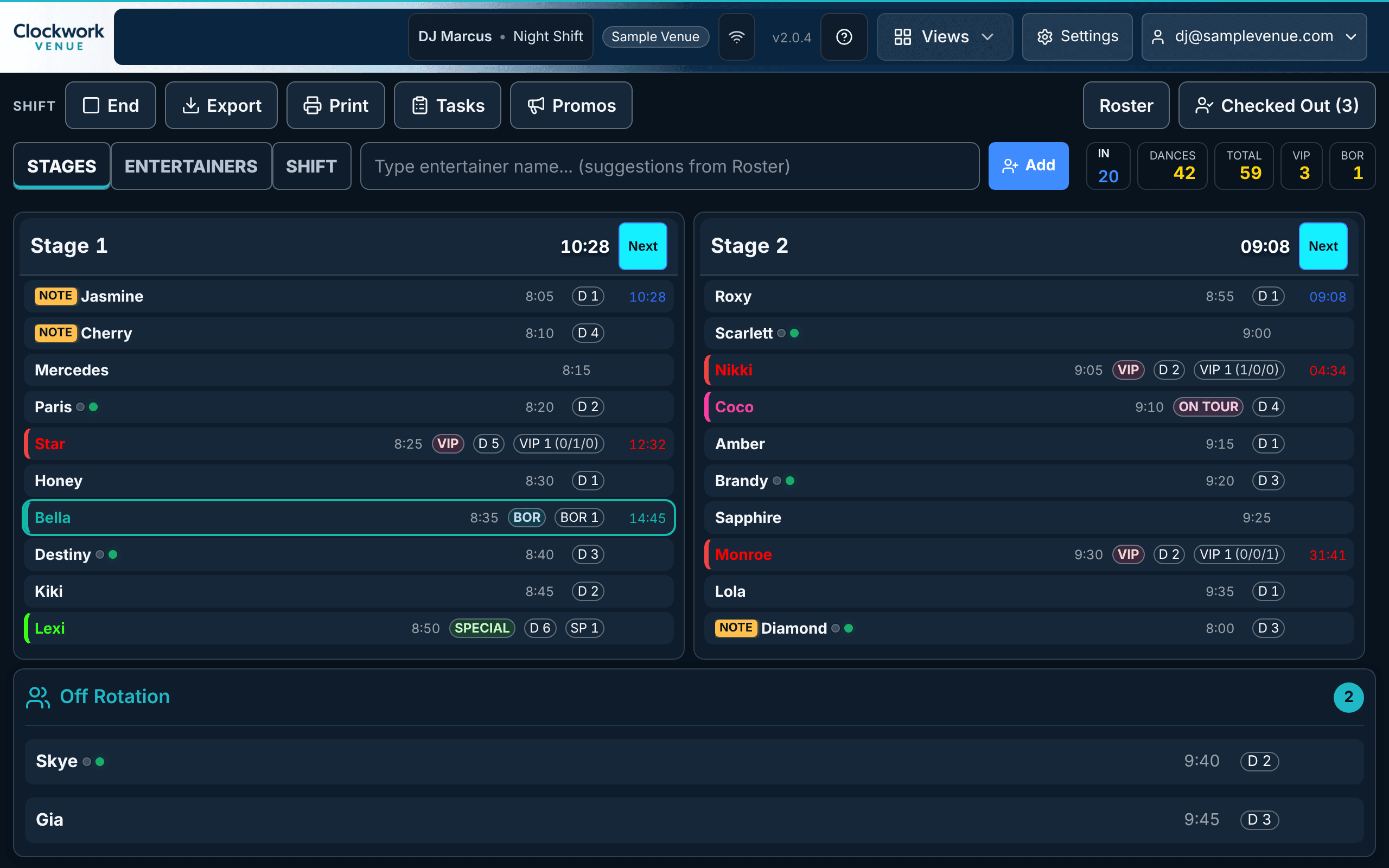
Right now anybody can paste a paragraph into Google Gemini or an app builder like Replit, type "build me a DJ rotation app," and have something on the screen by dinner. Names in a list, a timer, a button to bump the next entertainer up. It works. Sort of.
I'm not knocking those tools. We use AI every day. But an app that works on one phone during a demo and software that runs a packed club on a Saturday night are two very different things. Most owners and DJs can't see the difference until something breaks mid-shift.
I've spent 35 years in clubs and behind the DJ booth. Here's what I'd want you to know before you trust your floor to anything.
The problem is what nobody asked for
A one-prompt app only has what somebody thought to ask for. Names, a timer, some buttons. Fine.
But did anybody ask who's allowed to see the money? What happens when the Wi-Fi drops for ten seconds at 1 a.m.? Or what you'll show your lawyer when a dancer claims she worked shifts she never worked?
If nobody asked, it probably doesn't handle it. You won't find that out in the demo. You'll find it out on a Saturday.
Clockwork was built by club staff and developers
Clockwork Venue came from the club floor. I knew the problems because I lived them: paper lists, magnet boards, group texts, and a manager trying to make the numbers add up at close.
I built it with two partners at Digital VisionWorks who bring a combined 40 years of coding experience. The three of us mapped out the idea and the plan before we wrote a line of code. AI is a tool we use to build it and keep making it better, like a contractor with power tools. People still decide what gets built and why.
And no, it didn't work perfectly out of the gate. Six clubs beta tested it with me, and I handed it to a bunch of my friends to run on real shifts. It broke. A lot. People called me, we fixed it, then something else broke and we fixed that too. We did that for months.
That's what makes it solid today. You don't get there with a better prompt. You get there on real club floors.
A digital trail for every shift
This might be the most important thing Clockwork does for an owner.
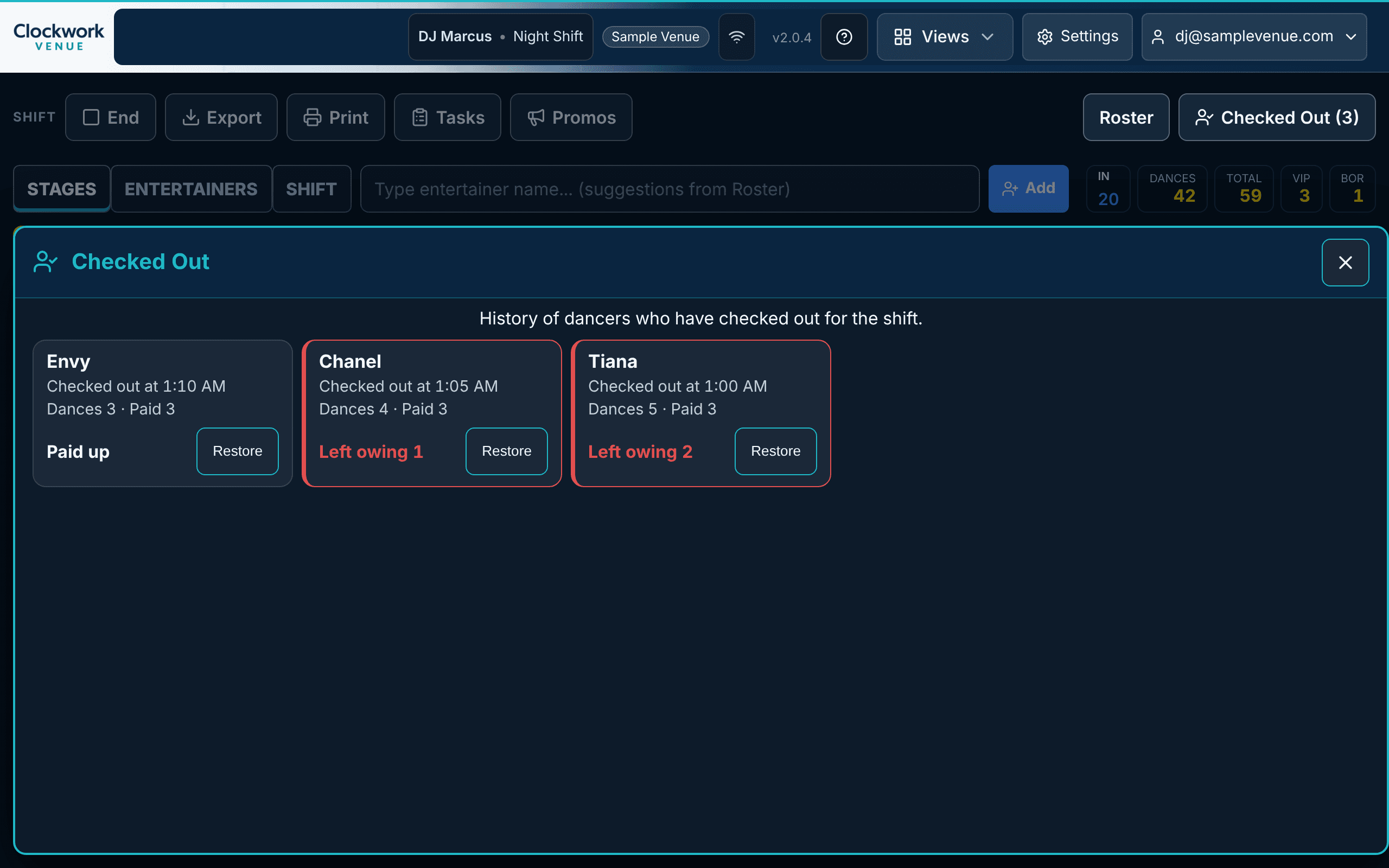
Dancers sue clubs. It happens more than people think, and the claim is usually the same: she worked more shifts, or more hours, than she really did. A lot of clubs have nothing to show back except a messy sign-in sheet, if they even have that.
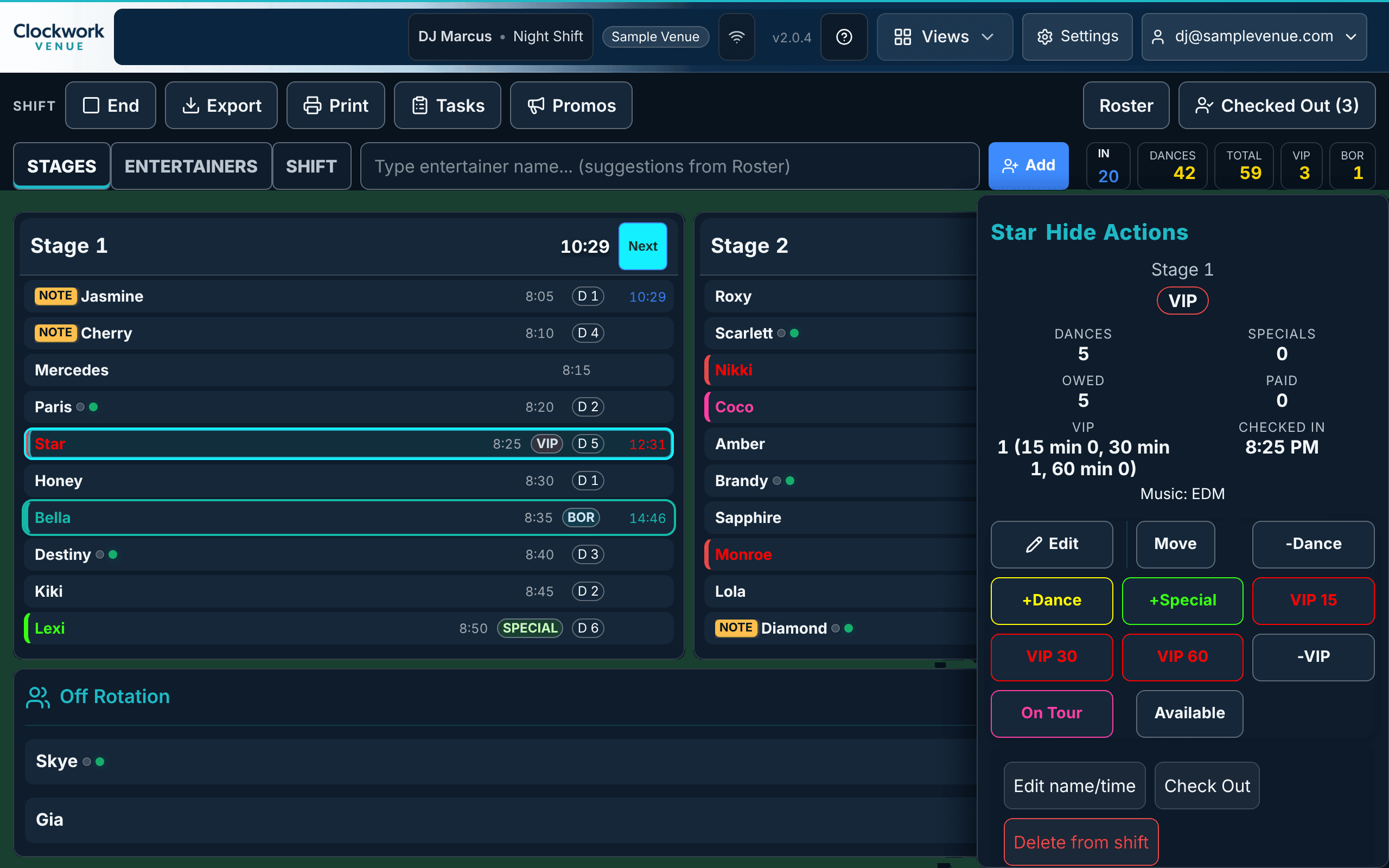
With Clockwork, every shift is on record: who checked in, when they checked out, how many dances they did and what they paid the house. That record gets saved before the board is cleared, archived every night and backed up, and you can print or export it whenever you need it.
So it's not just a paper trail anymore. It's a digital trail you can pull up months later and show exactly who worked when.
What's under the hood
You'll never see most of this, and that's the point.
- Your club's data stays your club's. No club can see another club's roster, shifts or reports. That's locked down at the database, not just hidden on the screen.
- Everybody gets their own login. The DJ, hosts, House Mom, door and manager each land on their own screen, and nobody can give themselves more access than their job needs.
- Sign-ups and checkout are guarded. Bots can't hammer them with thousands of fake attempts, and the server checks that requests are coming from the real Clockwork app.
- Backups on backups. It's backed up every day and every week, with a separate copy kept for 98 days.
Behind all of that are more than 4,000 automated tests that run every time we change something, and over 2,800 saved updates to the code. That's not a weekend project. That's a lot of late nights.
Judge the app by its website
Here's a shortcut, and you don't need to know anything about code to use it. Look at the website.
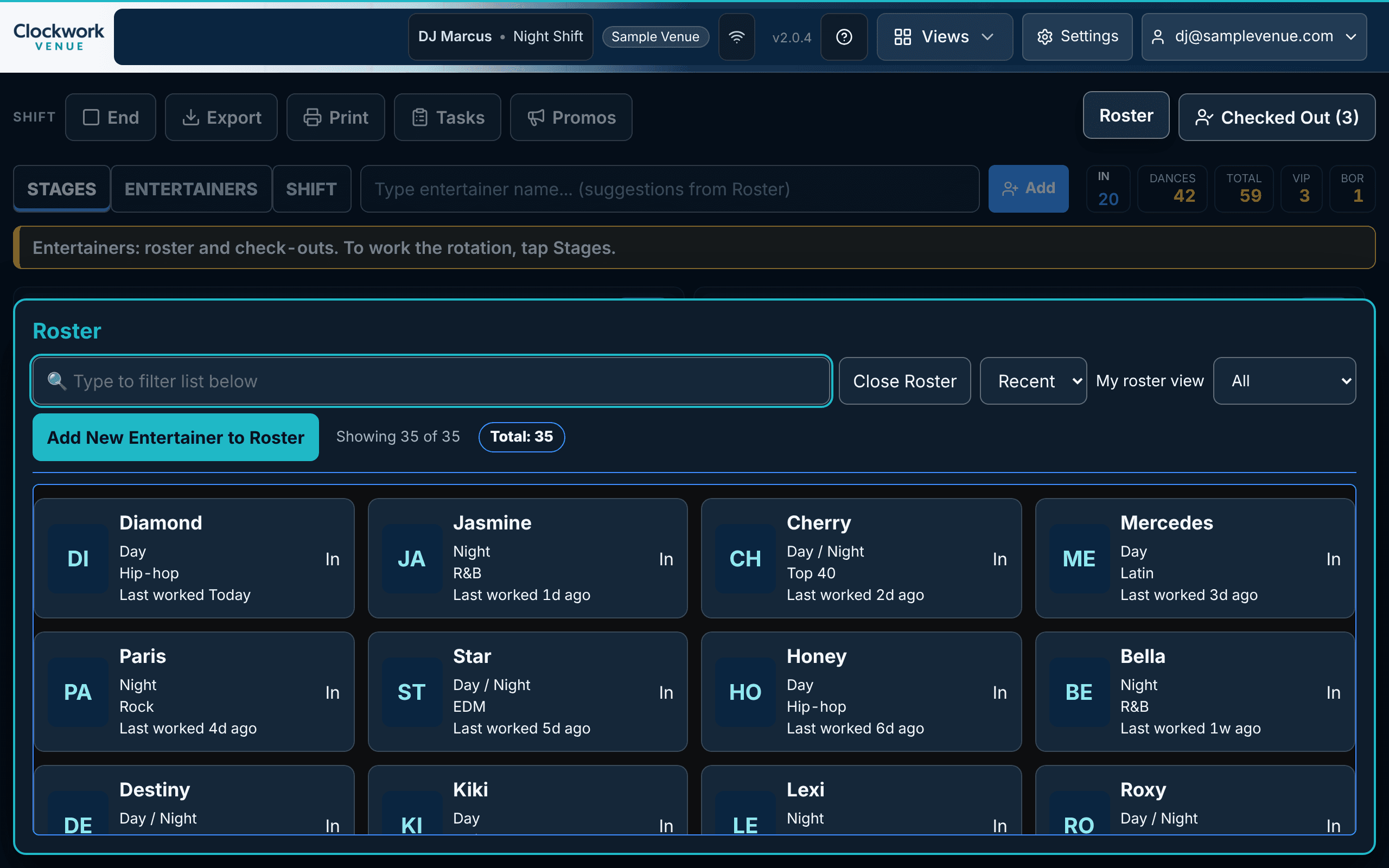
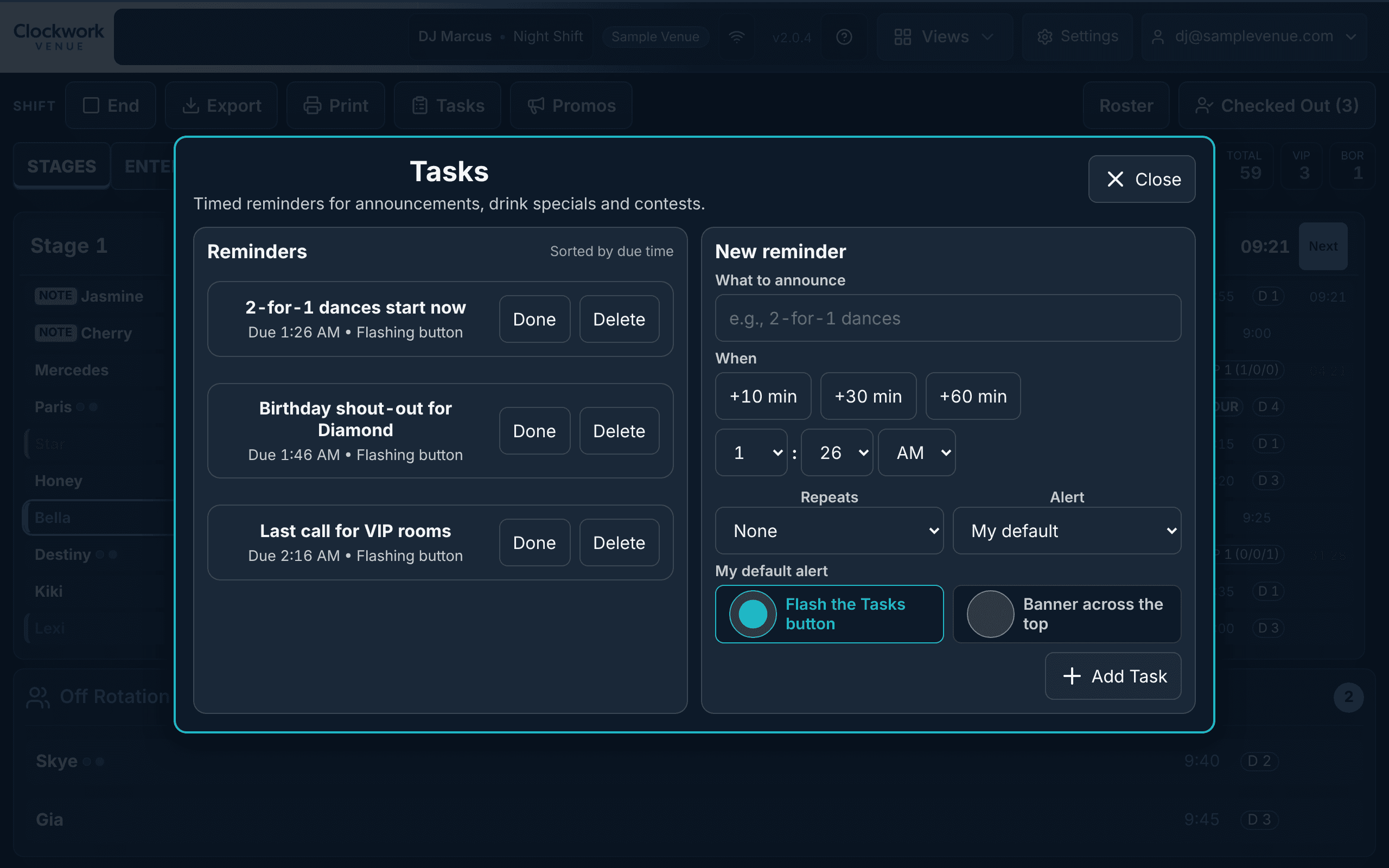
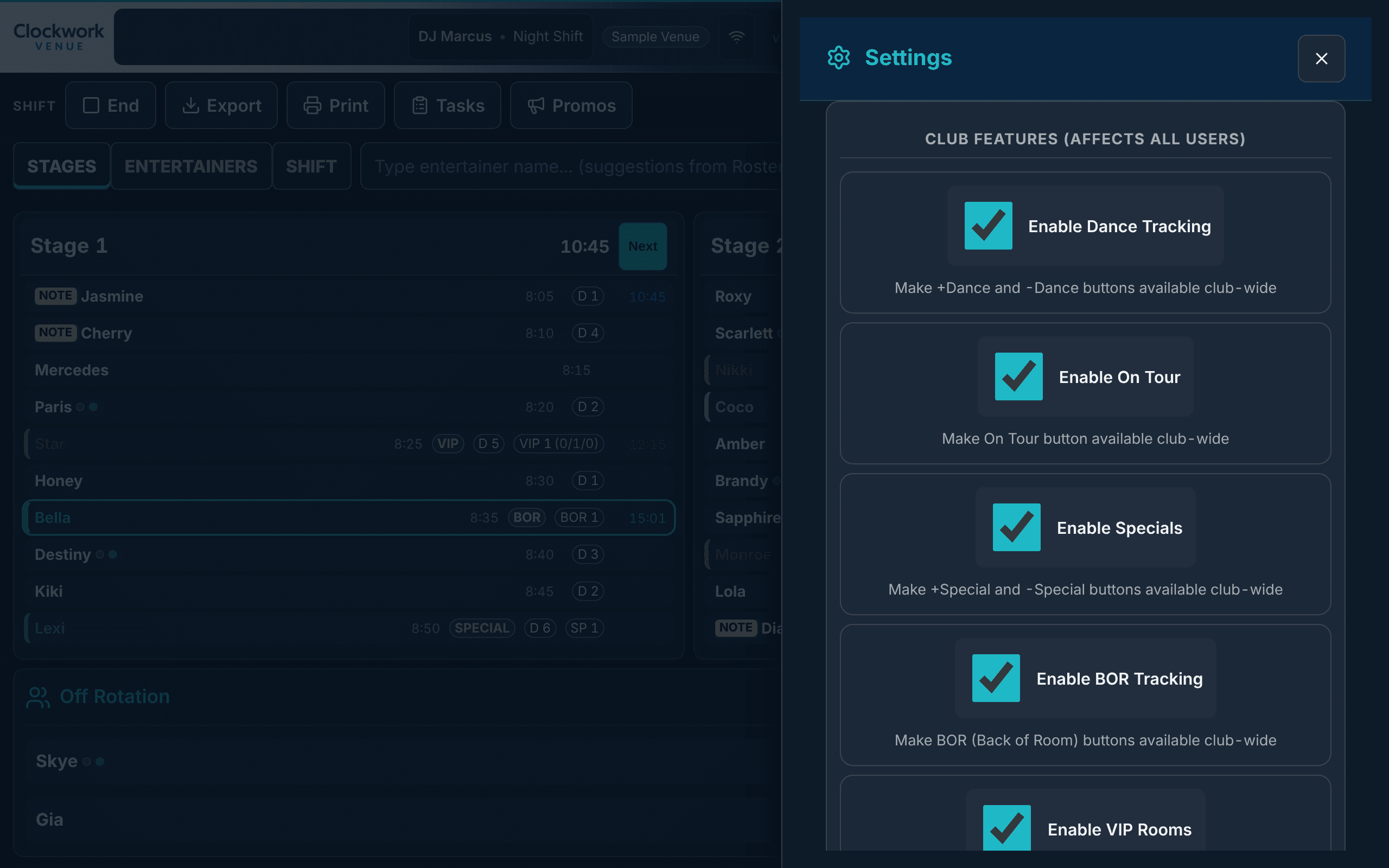
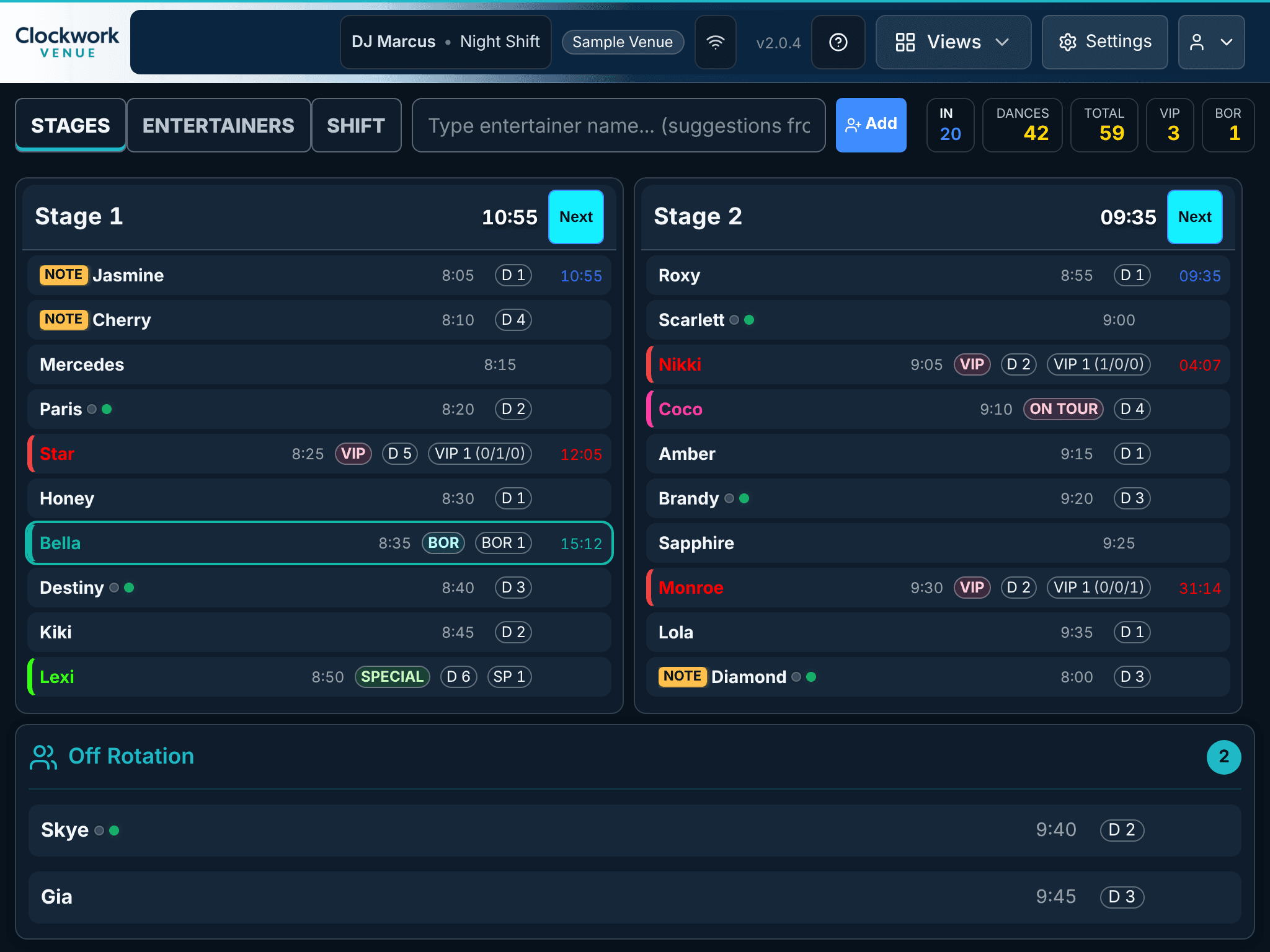
Real software has real screens, and the people who built it want to show them off. If an app says it runs your rotation and your VIP rooms, you should be able to see those screens. Actual screenshots, not stock photos of a club and a "Book a demo" button.
From what I've seen, a lot of the apps that claim to do what Clockwork does never show the software working. It's all talk. When there's not much built, there's not much to show.
So here's a little more of Clockwork. No stock photos.
What to look for:
- Screenshots of every main screen, not just one
- Pricing you can actually read
- A trial you can run on a real shift (Clockwork gives you 60 days)
- Real clubs using it
Who's running it
Clockwork runs in clubs like Thee Dollhouse in Tampa, Diamond Cabaret in Denver, Cheetah in Pompano Beach and Scores Palm Beach. KAYA in Fort Lauderdale, one of the most technically advanced clubs in the country, put it in before they even opened their doors. A club built around the latest tech wanted software that could keep up.
One DJ told us after his first night on it that he ditched the magnets and had been waiting for something like this for years. That's exactly who we built it for.
Ask before you trust any club software
Whoever's selling you software, ask them these:
- Does it actually work on a packed Saturday, not just in a demo?
- Does it do what it says it does?
- Is it secure, and has it been tested for the weird stuff that happens on a real night?
- Who can see my club's data?
With Clockwork, that last one has a simple answer. Your club's data is private. Nobody outside your club ever sees it, and inside the club, each person only sees what their job needs. If a company can't answer all four of those straight, keep looking.
Does "built with AI" mean easy to hack?
Some owners and managers worry that software built with AI opens a back door into their whole system. I get why people think that, but it's a misunderstanding.
There's no AI running inside Clockwork. We use AI as a tool while we write the code, the same way a builder uses power tools. The power tools don't come with the house. The app your staff uses doesn't talk to any AI service at all.
Clockwork also runs in a web browser like Google Chrome. Browsers keep every website walled off in its own space, so a web app can't reach into your computer's files, your POS or the rest of your network. There's nothing to install on your POS or office computers, and Clockwork doesn't connect to them.
And everything above still applies. Your data is locked to your club, every person has their own login, and it's all backed up.
Done fighting your rotation?
If you're still running your floor on paper, group texts and magnets, run Clockwork on a real shift and see the difference.
See how we built Clockwork Venue or start a conversation. Tell us how your night actually runs, and we'll tell you straight whether it's a fit.